Established in 2006 | Excellence in Research & Innovation
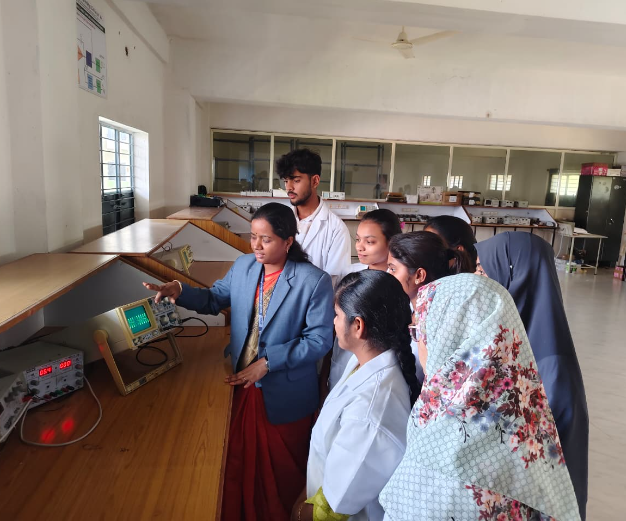
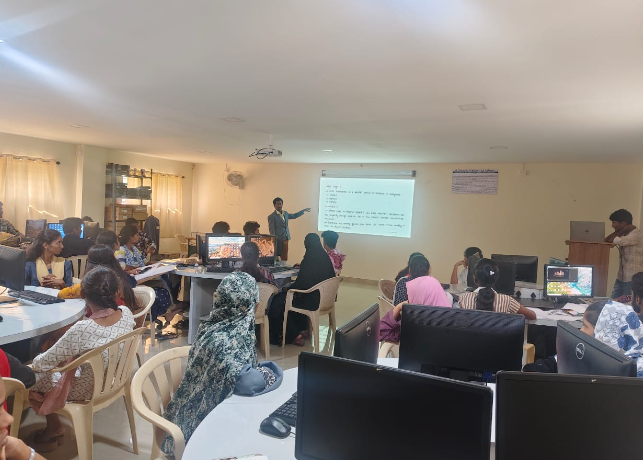
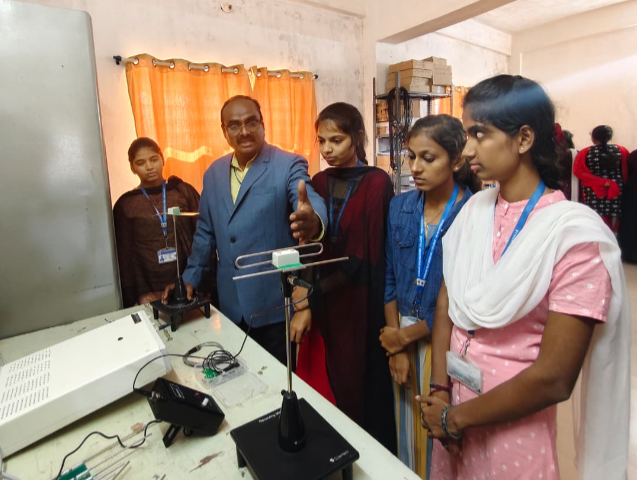
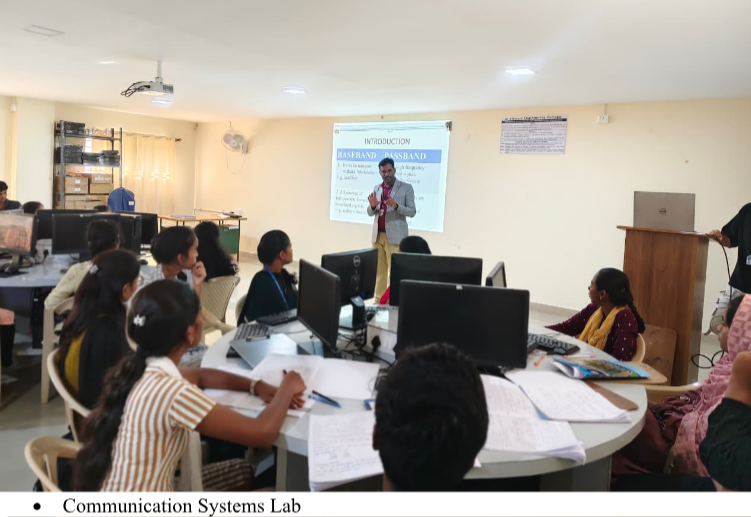
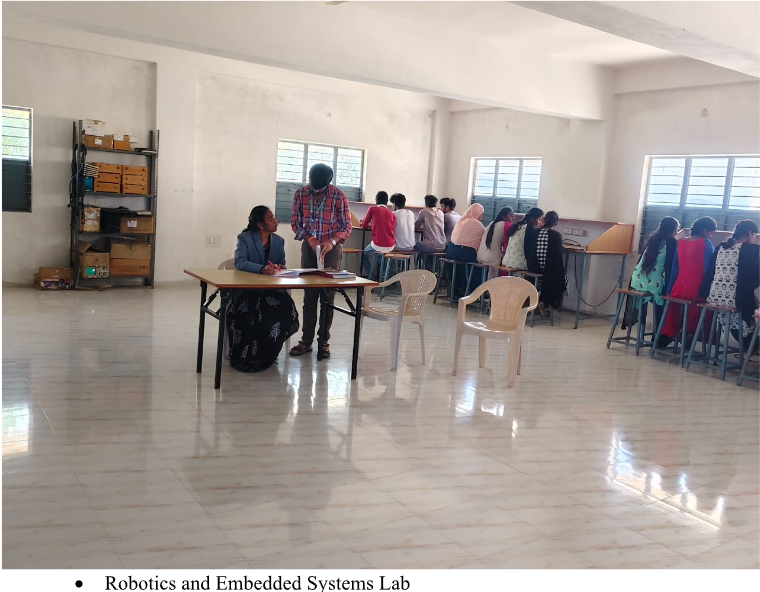
The Department of Electronics and Communication Engineering (ECE) was established in 2006. It offers both undergraduate (UG) and postgraduate (PG) programs and is equipped with advanced laboratories in Electronics, Communication, IoT, VLSI, and Robotics.
The department is driven by a team of experienced and committed faculty members and is steadily progressing in research. Our focus is on publishing in WoS/Scopus-indexed journals with high impact factors. Collaborative research with top international institutions and numerous funded project applications further elevate our academic profile.
Undergraduate program focused on core ECE domains, innovation, and industry readiness.
Postgraduate specialization in embedded technologies, IoT, and advanced system design.
The vision of the Department of Electronics and Communication Engineering is to produce globally competent and socially responsible Electronics and Communication Engineers with high academic knowledge, ethical values, leadership skills, and a passion to contribute to society.
The department aspires to be a center of excellence in emerging technologies and to carry out scientific research for societal benefit.
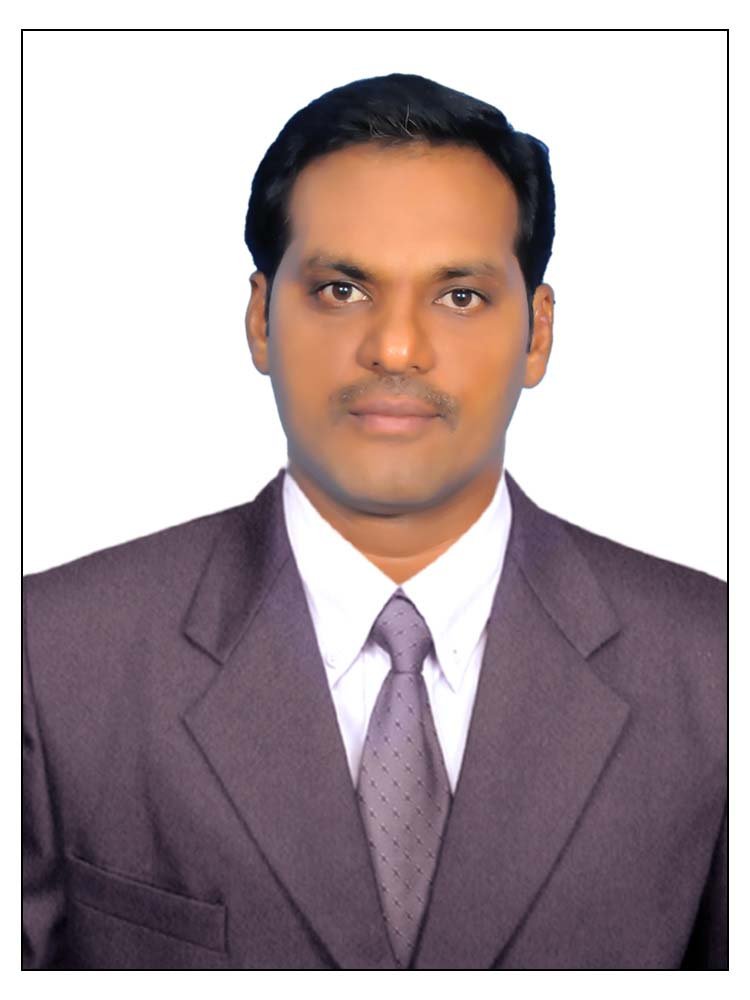
Designation: Associate Professor & Head, Department of ECE
Institution: Viswam Engineering College, Madanapalle
18 years of teaching experience in undergraduate and postgraduate programs.
Biomedical Image Processing, Internet of Things (IoT)
Program Educational Objectives, Outcomes & Specific Outcomes
Graduates will acquire the foundation of education that prepares them for both higher studies and professional careers in the sphere of Electronics and Communication Engineering.
Graduates will be able to indulge in problem identification, analysis and work-based experience to formulate and solve problems with acceptable design solutions.
Graduates will contribute towards entrepreneurship and research, and exercise leadership through effective communication, teamwork and knowledge upgradation through lifelong learning of society with professional ethics.
Apply the knowledge of mathematics, science, engineering fundamentals, and engineering specialization to the solution of complex engineering problems.
Identify, formulate, review research literature, and analyze complex engineering problems reaching substantiated conclusions using first principles of mathematics, natural sciences, and engineering sciences.
Design solutions for complex engineering problems and design system components or processes that meet the specified needs with appropriate consideration for public health and safety, and the cultural, societal, and environmental considerations.
Use research-based knowledge and research methods including design of experiments, analysis and interpretation of data, and synthesis of the information to provide valid conclusions.
Create, select and apply appropriate techniques, resources and modern engineering and IT tools, including prediction and modeling to complex engineering activities, with an understanding of the limitations.
Apply reasoning informed by contextual knowledge to assess societal, health, safety, legal and cultural issues and the consequent responsibilities relevant to professional engineering practice.
Understand the impact of professional engineering solutions in societal and environmental contexts, and demonstrate the knowledge of, and need for sustainable development.
Apply ethical principles and commitment to professional ethics and responsibilities and norms of the engineering practice.
Function effectively as an individual, and as a member or leader in diverse teams, and in multidisciplinary settings.
Communicate effectively on complex engineering activities with the engineering community and with society at large, such as, being able to comprehend and write effective reports and design documentation, making effective presentations, and give and receive clear instructions.
Demonstrate knowledge and understanding of the engineering and management principles and apply these to one’s own work, as a member and leader in a team, to manage projects and in multidisciplinary environments.
Recognize the need for and have the preparation and ability to engage in independent and life-long learning in the broadest context of technological change.
Analyze, design, synthesize and develop solutions by applying the foundational concepts of electronics and communication engineering.
Emerge as ethical leaders, engage in lifelong learning, pursue entrepreneurship and contribute in the field of Electronics and Communication Engineering.
| S. No. | Name | Designation | Qualification | Experience | Scholar/ORCID ID |
|---|---|---|---|---|---|
| 1 | Dr. T.S. Ghouse Bhasha | Professor & Vice Principal | Ph.D. | 21 Years | Google Scholar |
| 2 | Dr. B.D. Venkata Ramana Reddy | Professor & Dean NBA | Ph.D. | 25 Years | ORCID |
| 3 | Dr. J. Maheswar Reddy | Professor & Dean FDP | Ph.D. | 20 Years | Google Scholar |
| 4 | Dr. B. Suresh Babu | Associate Professor & HOD | Ph.D. | 18.5 Years | Google Scholar |
| 5 | Dr. S. Nanda Kishor | Professor | Ph.D. | 19 Years | Google Scholar |
| 6 | Dr. Y. Ravi Shankar | Professor | Ph.D. | 20 Years | ORCID |
| 7 | Dr. B. Nagarjuna Reddy | Professor | Ph.D. | 13 Years | Google Scholar |
| 8 | Mrs. T. Reddy Rani | Associate Professor | M.Tech (Ph.D) | 11 Years | ORCID |
| 9 | Mr. T. Jaya Simha | Associate Professor | M.Tech (Ph.D) | 14 Years | ORCID |
| 10 | Mr. T. Hussaini | Associate Professor | M.Tech (Ph.D) | 13 Years | ORCID |
| 11 | Mr. N. Nagendra | Assistant Professor | M.Tech (Ph.D) | 7.5 Years | ORCID |
| 12 | Mrs. B. Keerthi | Assistant Professor | M.Tech (Ph.D) | 5 Years | ORCID |
| 13 | Mrs. G. Manjula | Assistant Professor | M.Tech (Ph.D) | 3.9 Years | ORCID |
| 14 | Mrs. D. Supriya | Assistant Professor | M.Tech | 4 Years | ORCID |
| 15 | Ms. K. Apsara | Assistant Professor | M.Tech | 1 Year | – |
| 16 | Mrs. C. Jhansi Lakshmi | Assistant Professor | M.Tech | 0.6 Years | – |
| S. No. | Faculty Name | Achievements / Certifications |
|---|---|---|
| 1 | Dr. B.D. Venkata Ramana Reddy | Participated in IP Awareness Training under National Intellectual Property Awareness Mission |
| 2 | Dr. Nanda Kishor S | Participated in IP Awareness Training under NIPAM Certified as NPTEL Believer and Motivated Learner at IIT Madras |
| 3 | Dr. Suresh Babu B | Completed ATAL FDP on AI-generated Semiconductor Devices Participated in IP Awareness Training under NIPAM Certified Reviewer for International Journal of Computational Intelligence System |
| 4 | Dr. Ravi Shankaraiah | Completed ATAL FDPs on: – AI Techniques using MATLAB – AI Technologies for EVs and Smart Grid – FPGA Realization of Intelligent Controllers Completed NPTEL Certification on Introduction to IoT |
| 5 | Mr. T. Hussaini | Completed NPTEL Certifications on Operating Systems and Cloud Computing Certified as NPTEL Motivated Learner at IIT Madras |
| 6 | Mrs. Tudumu Reddi Rani | Completed multiple ATAL FDPs on: – mmWave Technologies (x2) – 5G/6G Wireless Communications – IoT & 5G/6G Integration – AI-enabled Collaborative Learning in 6G – Innovative Approaches in IoT & Embedded Systems – Recent Advancements in Connectivity |
| 7 | Mr. T. Jayasimha | Participated in IP Awareness Training under NIPAM Participated in National FDP on AI Tools (Brain o Vision + AICTE) Completed ATAL FDP on Entrepreneurship |
| 8 | Mr. N. Nagendra | Completed FDPs on: – Next Gen AI & ChatGPT (ExcelR) – Advancements in AI & ML for Engineering Students |
| 9 | Ms. B. Keerthi | Presented paper: “Exploring the Power of Multi Sensor Data in IoT” at CRATE-2025 Participated in IP Awareness Training under NIPAM |
| 10 | Mrs. Dabala Supriya | Completed ATAL FDP on Smart Manufacturing & Digital Transformation in Industry 4.0 Completed NPTEL Certification on Introduction to IoT |
| 11 | Mrs. G. Manjula | Completed ATAL FDPs on: – Crossroads of AI & Signal Processing – Quantum Computing (Basic & Advanced) – Semiconductor Chip Designing Presented paper: “Exploring the Power of Multi Sensor Data in IoT” at CRATE-2025 Participated in IP Awareness Training under NIPAM Completed NPTEL Certification on Introduction to IoT |
Department of Electronics & Communication Engineering – Topper List
| S. No | Roll Number | Name | Percentage |
|---|---|---|---|
| 1 | 23W51A04C6 | Veparala Tanshi | 80.40% |
| 2 | 23W51A0474 | Nagur Afroj | 80.30% |
| 3 | 24W55A0407 | C. Sreeja | 79.00% |
| S. No | Roll Number | Name | Percentage |
|---|---|---|---|
| 1 | 23W55A0420 | S. Tahseen | 82.80% |
| 2 | 22W51A0431 | Varra Baby | 82.60% |
| 3 | 23W55A0406 | B. Nandini | 81.30% |
| S. No | Roll Number | Name | Percentage |
|---|---|---|---|
| 1 | 22W51A0411 | C. Lavanya | 97.00% |
| 2 | 22W51A0409 | B. Himaja | 96.60% |
| 3 | 22W51A0417 | D. Dhanalakshmi | 95.00% |
| S. No | Roll Number | Name | SGPA |
|---|---|---|---|
| 1 | 24W51A0475 | N. Jahnavi | 9.74 |
| 2 | 24W51A0491 | S. Navya | 9.69 |
| 3 | 24W51A04C9 | P. Geetha | 9.69 |
| 4 | 24W51A04D0 | L. Reddy Navya | 9.67 |
| S.No | Name of the Alumni | Batch | Working Place |
|---|---|---|---|
| – | Savadasari Thippa Reddy | – | Masters in Information Studies, Trine University, Detroit, Michigan, USA |
| 1 | Rasinti Madhuri | 2022 | Signoff Semiconductors |
| 2 | Chinnagouni Vishnupriya | 2023 | NTT Data Business Solutions |
| 3 | S. Sai Nishwanth | 2024 | Netflix Operations |
| 4 | C. Pratap Reddy | 2024 | AI Engineer, ATOS Global IT Solutions, Bangalore |
| 5 | D. Suchitra | 2024 | Quality Assurance Engineer, Mantrine Solutions |